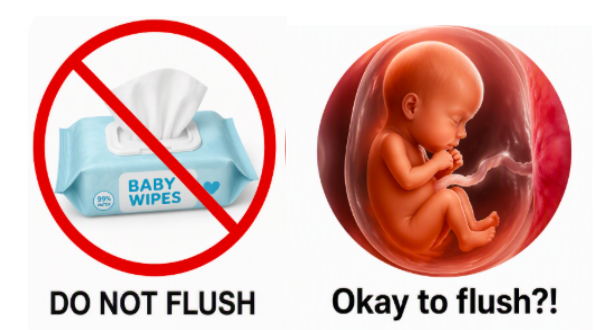
Congress doesn't want Americans to flush baby wipes. Yet every day, nearly 2,000 unborn children are flushed down the toilet after starving to death in their mother's wombs.
Legislation introduced by Congresswoman Sherri Biggs (R-SC) tackles this tragic irony head on, because if we should not flush baby wipes, we certainly should not flush babies.
Our society should not condone ending unborn lives, but it does. To change this, we must advance policies that honor and uphold human dignity, like the Don’t Flush Babies Act.
Inspired by the WIPPES Act, the Don’t Flush Babies Act ends the decades-long practice callously promoted by the abortion industry of flushing aborted children into our public sewer systems. Instead of flushing babies, women will be issued catch kits for the sanitary and safe collection of the aborted human fetal remains and solid medical waste expelled during a chemical abortion. They will then be able to return the human fetal remains to the abortion provider for cremation or burial, and the solid medical waste for proper disposal.
Undoubtedly, some women will reconsider their decision to take abortion pills.
WHY THIS LEGISLATION IS NECESSARY
Since the original (flawed) approval of chemical abortion pills in 2000, use of chemical abortion pills has increased steadily, rising from 6% in 2001 to 65% in 2023 (and likely much higher given underreporting and illegal online access). Today, chemical abortions — which essentially starve babies in their mother’s wombs by cutting off vital nutrients — comprise the vast majority of the over 1 million abortions that occur annually. As abortion providers routinely instruct women undergoing at-home chemical abortions to sit on the toilet, countless unborn children are routinely flushed into America's public sewer systems.
Daily, in the thousands. Annually, in the hundreds of thousands. This raises serious concerns involving: